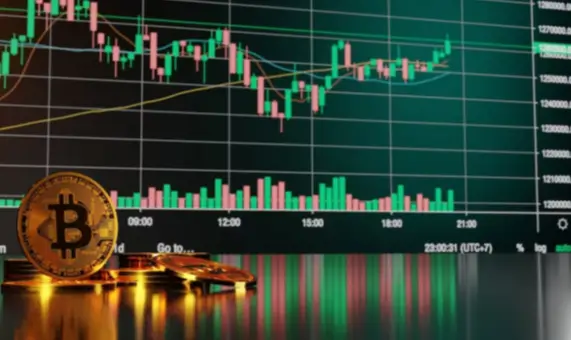

Trading indicators in cryptocurrency markets translate raw price, volume, and volatility data into probabilistic signals that guide risk-aware decisions. They summarize market dynamics, quantify potential moves, and aid in position sizing, timing entries, and setting stops. By integrating momentum, volatility, and volume insights, indicators reveal convergence and divergence patterns while accounting for regime shifts and sentiment. Used with backtesting and disciplined risk controls, indicators support disciplined forecasting rather than definitive predictions, leaving questions to resolve as markets evolve.
What Crypto Indicators Do for Your Trades
Crypto indicators translate market data into actionable signals by summarizing price action, volume, and volatility into probabilistic assessments of likely future moves. They quantify risk and frame decision thresholds, enabling disciplined trade sizing and timing. User sentiment and regulatory impact influence signal interpretation, shaping expectations and safeguards. Operators interpret probabilistic outputs to balance freedom with prudence, refining strategies through objective, data-driven adjustments.
The Three Core Indicator Categories: Momentum, Volatility, and Volume
Traders and analysts categorize indicators into three core families—momentum, volatility, and volume—to structure probabilistic expectations about price evolution in cryptocurrency markets.
Momentum captures pace and direction via momentum divergence signals; volatility assesses risk through volatility spikes; volume examines participating interest via volume patterns and liquidity shifts.
Together, these categories quantify probabilistic outcomes, guiding disciplined, freedom-oriented decision-making under uncertainty.
See also: How Artificial Intelligence Is Used in Cybersecurity
How to Combine Indicators in Crypto Trading
How should indicators be combined to form robust trading decisions in crypto markets? A rigorous framework emphasizes indicator pairings with complementary strengths, reducing false signals. Combine trend, momentum, and volatility signals to form probabilistic expectations, weighting by historical reliability. Maintain disciplined risk management: predefined position sizes, stop rules, and drawdown limits. Seek convergence, not overfitting, and continuously reassess performance and correlation dynamics.
Adapting Indicators to Market Regimes and Avoiding Pitfalls
Market regimes in cryptocurrency markets shift with varying liquidity, volatility, and macro drivers, requiring indicators to be interpreted under context rather than in isolation. Adaptation relies on regime-aware calibration, backtesting across samples, and probabilistic updates. Recognize regression myths that degrade signal quality; monitor regime shifts instead of assuming stationarity. This disciplined approach reduces overfitting and enhances robustness for diversified, freedom-seeking traders.
Conclusion
In crypto trading, indicators distill price, volume, and volatility into probabilistic forecasts that inform risk-aware decisions. Rigorous use—backtested, regime-aware, and discipline-driven—balances signal with uncertainty. Momentum, volatility, and volume signals converge to quantify likely moves, sizing, and timing while adapting to regime shifts. As in any data-driven domain, traders should continuously evaluate performance, acknowledge false positives, and maintain robust risk controls. An anachronism: Bayesian priors whisper from the past as markets pivot, guiding disciplined, probabilistic expectations forward.